
Loading...
Serving Portsmouth, NH and surrounding areas. (603) 956-1359
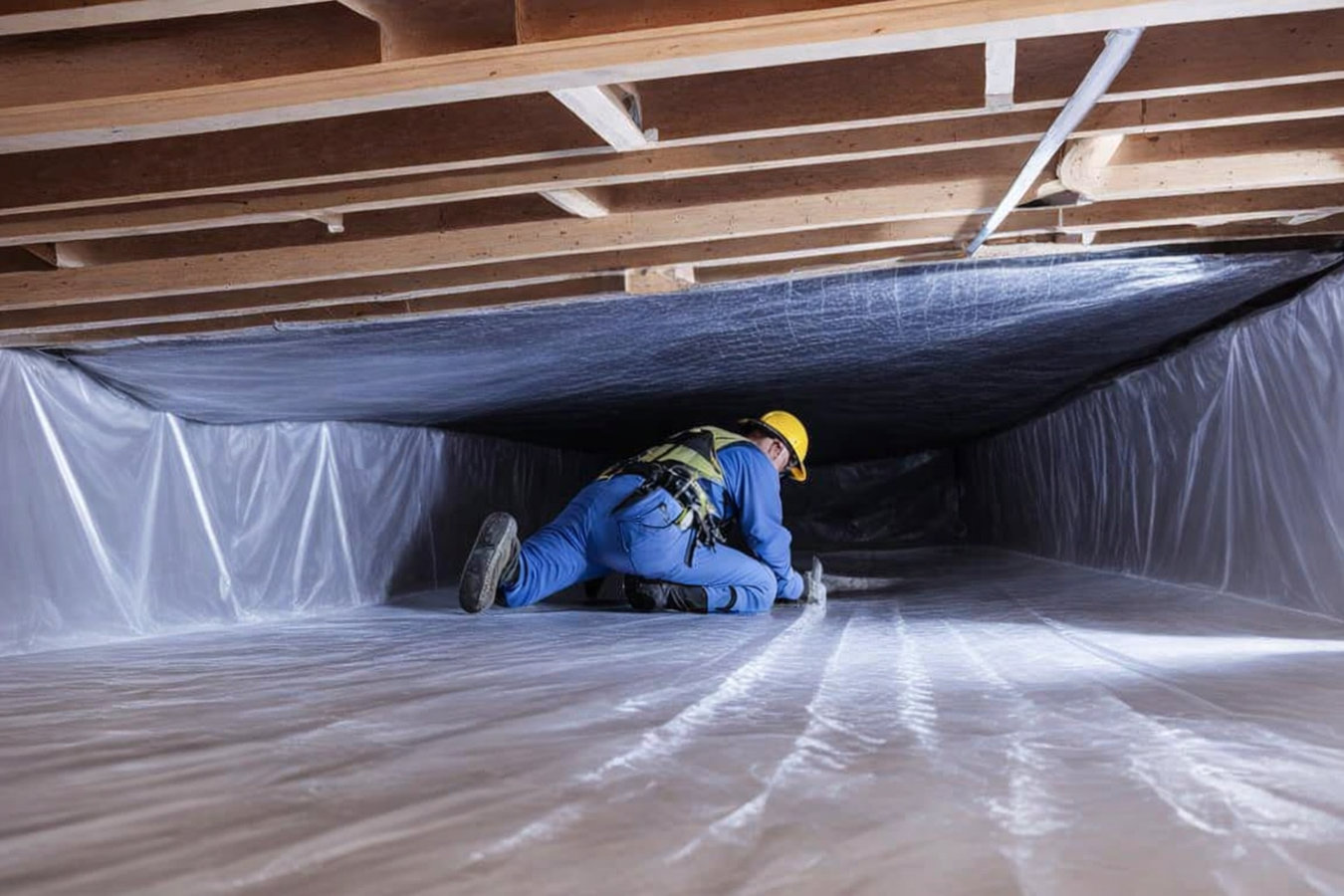
Ground moisture rising through an unprotected crawl space rots joists, raises heating bills, and fills your home with musty air. We install a complete barrier so the problem stops at the source.
Vapor barrier installation in Portsmouth means laying heavy plastic sheeting across the dirt floor of your crawl space - and sometimes up the foundation walls - to block moisture from the ground before it rises into your home. Most jobs are completed in a single day, and a properly installed barrier lasts 20 years or more. Think of it as a raincoat for the underside of your house: the ground under a Portsmouth home stays wet for months at a time, and without that barrier, that moisture works against your floors, your joists, and the air your family breathes.
Portsmouth has a large share of homes built before the 1970s, and most of them were never built with any moisture protection in the crawl space. If your home dates to that era, bare dirt is likely all that sits between the ground and your floor joists right now. Pairing vapor barrier installation with crawl space vapor barrier work for wall coverage and attic air sealing gives you a complete moisture and air barrier from top to bottom.
We offer free crawl space inspections for Portsmouth and Seacoast homeowners. If you have never had the space checked, or if you have noticed any of the common signs below, a quick look is worth doing.
If your first floor feels noticeably cold in January even with the heat running, moisture rising from an unprotected crawl space is often the cause. Portsmouth winters are long and cold, and an unsealed dirt floor under your home works against your heating system every single season. Many homeowners notice this for years before connecting it to the crawl space.
A persistent earthy or musty odor - particularly after a wet spring or snowmelt - often means mold or mildew is growing somewhere below your living space. Portsmouth's damp springs create exactly the conditions that feed mold in unprotected crawl spaces. If the smell is strongest near the floor or in a first-floor closet, the crawl space is the first place to look.
If you have ever peeked into your crawl space and seen nothing but bare earth - or worse, puddles - that space has no moisture protection at all. Many Portsmouth homes built before the 1970s were left this way. Bare dirt under a home in a coastal New England climate is a moisture problem that gets worse every year it goes unaddressed.
Moisture attracts carpenter ants and accelerates wood rot in floor joists. If a home inspector, plumber, or pest control company has flagged soft wood, insect activity, or rot under your home, a vapor barrier is almost certainly part of the solution. Addressing the moisture source is the first step before any structural repairs can hold.
Every job starts with a free inspection before we quote anything. We check for standing water, existing damage, pest activity, and the condition of the floor joists - so the solution we propose is sized for your specific crawl space, not a generic package. On installation day, the crew clears out any debris, lays heavy-duty polyethylene sheeting across the entire floor, overlaps and tapes all seams, and secures the edges against the foundation walls. You should be able to see a clean, continuous sheet with no exposed dirt anywhere.
For homes where moisture is especially persistent - near the Piscataqua River, in low-lying neighborhoods, or in older wood-frame construction - we can extend the barrier up the foundation walls for full perimeter coverage. We also offer crawl space vapor barrier installation as part of a broader encapsulation package, and many homeowners combine vapor barrier work with attic air sealing to address moisture and air leakage in one coordinated project - which may qualify for NHSaves rebates.
Best for crawl spaces with a straightforward layout and no active water intrusion - covers the full floor with 10 to 20 mil sheeting, sealed at all seams.
Best for homes near tidal water, the Piscataqua River, or low-lying neighborhoods with higher water tables - covers the floor and runs up the foundation walls for complete edge sealing.
Best for homeowners who want to address moisture and heat loss in one visit - pairs the vapor barrier with crawl space insulation for maximum comfort and potential rebate eligibility through NHSaves.
Best for homes where old or degraded sheeting needs to come out first - includes removing the failed barrier and any damaged insulation before installing new material.
Portsmouth is one of New Hampshire's oldest cities, and that history shows in its housing stock. A large share of homes here were built before the 1970s with open, uninsulated crawl spaces and no moisture barrier - it simply was not standard practice. Combined with Portsmouth's coastal climate - heavy snowfall, persistent freeze-thaw cycles, and wet springs that push ground moisture upward - many of these homes have been quietly accumulating moisture damage for decades. Homeowners in Dover and other Seacoast communities with similar older housing stock face the same underlying problem.
Parts of Portsmouth also sit close to the Piscataqua River, tidal inlets, and low-lying areas where the water table is naturally high. In these neighborhoods, ground moisture is not just a seasonal concern - it is a year-round pressure pushing up from below. Homeowners in those areas often need heavier-duty materials and more careful edge sealing than those on higher ground. We work across the entire Seacoast region, including communities like Exeter, and we understand the specific moisture conditions that Portsmouth homes face. A vapor barrier is not a luxury here - it is one of the most cost-effective things you can do to protect your investment.
When you reach out, we ask a few basic questions about your home and the issues you have noticed. We respond within one business day, and we can usually schedule a free inspection within the week. You do not need to know the square footage of your crawl space - we will measure it ourselves.
We enter the crawl space to check for standing water, existing damage, pest activity, and the condition of the floor joists. The visit takes about 30 to 45 minutes. At the end, we tell you in plain terms what we found and what we recommend - no pressure to commit on the spot.
You receive a written quote covering exactly what will be done, what materials will be used, and the total cost. Any prep work - removing old insulation or treating mold - is listed separately so you can decide what to include. Take your time; we will not pressure you to sign quickly.
The crew accesses your crawl space, clears out debris, and lays the barrier across the floor and up the walls. All seams are sealed and edges secured. Most jobs are done in a single day. Before leaving, we walk you through what was done and show you photos of the finished installation.
No obligation. We reply within one business day and can usually schedule within the week.
(603) 956-1359We have been working on Seacoast homes since 2019 and understand the specific challenges that older wood-frame construction near tidal water presents. The moisture conditions in a South End triple-decker are different from those in a newer home on higher ground, and we spec our materials and approach accordingly.
The biggest difference between a quality vapor barrier job and a poor one is how well the seams are sealed and whether the barrier runs up the walls. Our standard is full coverage with no exposed dirt, taped seams overlapping by at least 12 inches, and edges secured to the foundation. We show you photos when the job is done.
New Hampshire's NHSaves program - run through Eversource and Liberty Utilities - offers rebates for qualifying home energy improvements. Vapor barrier work paired with insulation or air sealing often qualifies. We walk you through what your project may be eligible for before you commit, so you know the real cost.
We look at your home as a system, not just one problem to fix. A vapor barrier is often part of a larger picture that includes air sealing, insulation, and ventilation. We will flag other issues we notice during the inspection and let you decide what to address and when. You can learn more about whole-home building performance from the Building Performance Institute.
Our combination of local experience and a clear standard of workmanship means you know what you are getting before we start and can see exactly what was done when we finish.
The Building Science Corporation and the NHSaves program both provide guidance on proper vapor barrier installation and available rebates for New Hampshire homeowners.
Seal the air gaps in your attic that let heat escape in winter and drive up your heating bills across Portsmouth's long cold season.
Learn MoreExtend moisture protection to the crawl space walls and perimeter for complete encapsulation, not just a floor-level barrier.
Learn MorePortsmouth winters start early and the ground stays wet for months. Schedule your free inspection now and have the barrier in place before the cold season sets in.