
Loading...
Serving Portsmouth, NH and surrounding areas. (603) 956-1359
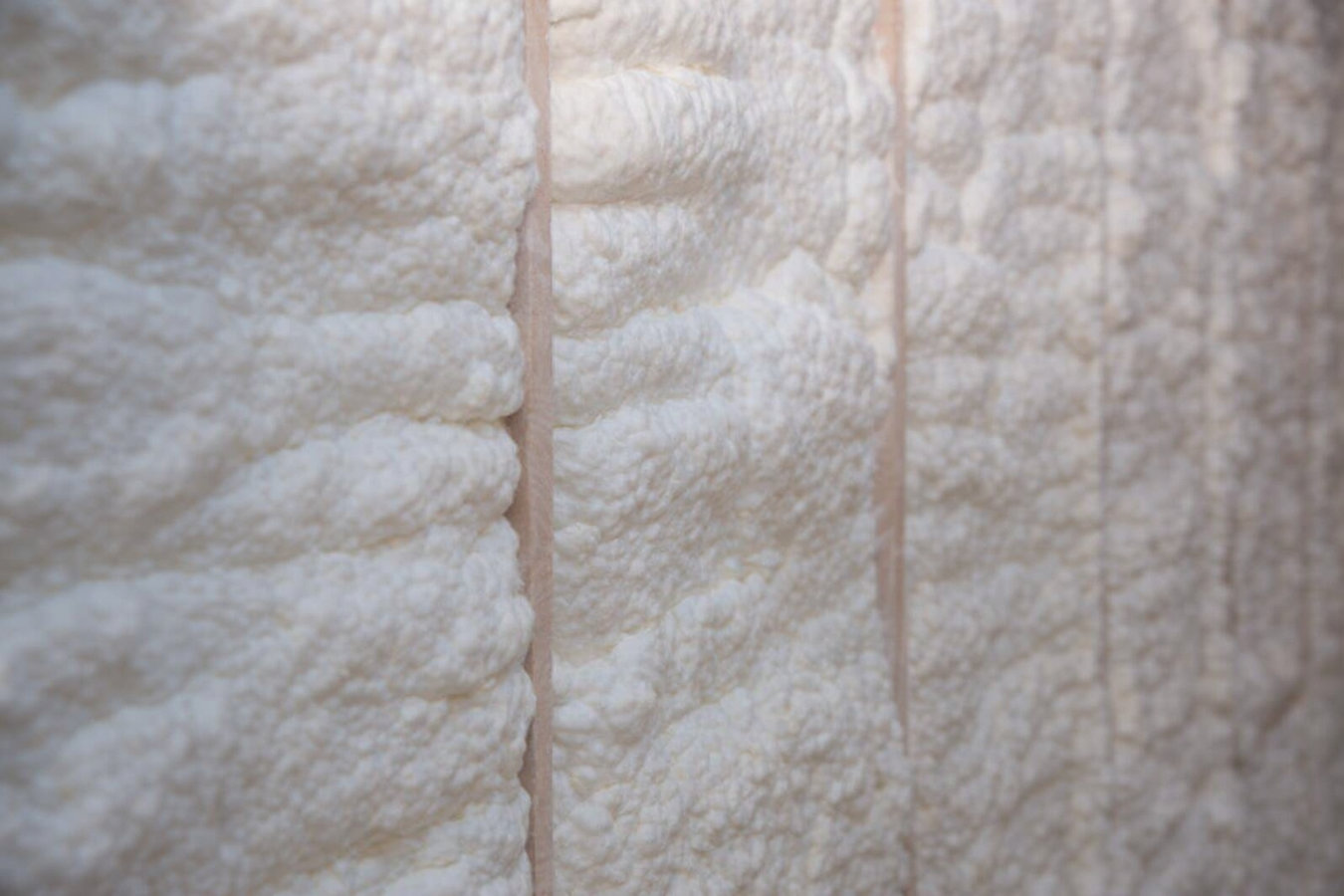
Portsmouth's older homes lose heat through gaps batts can't reach. Open-cell spray foam fills every crack and air-seals your home in one visit.
Open-cell foam insulation in Portsmouth, NH is a spray-applied material that expands up to 100 times its original size, filling wall cavities, attic spaces, and crawl areas while sealing air leaks at the same time. Most residential jobs are completed in one to two days.
If your home dates to the mid-20th century or earlier, the problem is almost never missing insulation alone - it is the hundreds of small gaps around framing, pipes, and wires where cold Seacoast air finds its way in. Open-cell foam addresses both insulation and air sealing in a single step, which is something fiberglass batts simply cannot do on their own. Many Portsmouth homeowners pair it with closed-cell foam insulation in moisture-prone areas like rim joists for a complete solution.
The soft, porous structure of open-cell foam also absorbs sound - a side benefit that homeowners in Portsmouth's denser South End and downtown neighborhoods notice quickly.
If your heating costs jump dramatically during Portsmouth's coldest months even though your habits have not changed, conditioned air is almost certainly escaping. The most likely culprits are air leaks at the rim joist, attic floor, or crawl space - all areas open-cell foam reaches in a single installation.
A bedroom over the garage, a finished attic room, or a corner that always runs cold is a sign that insulation in that area is thin, missing, or full of gaps. Portsmouth cape-style homes frequently have this problem in knee wall spaces and sloped ceiling cavities that were never properly insulated to begin with.
Hold your hand near an electrical outlet on an exterior wall on a cold day. If you feel a draft, air is moving through the wall cavity from outside. The same test works along baseboards and around window trim. These small but persistent leaks add up to significant heat loss over a Portsmouth winter.
Ice dams - the ridges of ice that build at the roof edge in winter - form when heat escapes through your attic and melts snow unevenly. Portsmouth homeowners with older homes see this regularly. Beyond roof damage, ice dams are a reliable sign that the attic needs better insulation and air sealing.
We apply open-cell spray foam in attic floors, sloped ceiling cavities, interior wall assemblies, and crawl space ceilings. It is a strong fit wherever air sealing is the primary goal and moisture exposure is low. For homeowners who also need work done in areas like finished basement walls or rim joists where moisture resistance matters more, we often recommend pairing open-cell foam with closed-cell foam insulation in those specific locations.
Open-cell foam also works well as part of a broader home performance upgrade. Homeowners dealing with drafty older construction often combine it with our commercial insulation services for investment properties, or use it alongside other insulation types in mixed assemblies. We assess each home individually and recommend the combination that makes the most sense for your specific layout and budget.
Best suited for homeowners who want to seal the attic floor and stop ice dam formation at the source.
Ideal for older homes with irregular stud bays where batts leave too many gaps and drafts persist year-round.
Suits homes with vented crawl spaces where air sealing the floor above matters more than vapor control.
A practical choice for homeowners in Portsmouth's denser neighborhoods who want quieter rooms alongside energy savings.
Portsmouth sits in IECC Climate Zone 6, one of the colder designations in the country, with heating seasons that stretch from October through April. A significant share of Portsmouth's residential neighborhoods - including Islington Street, the South End, and the historic downtown - consists of wood-frame homes built before 1960 with minimal original insulation and irregular framing that makes batts a poor fit. Open-cell foam's ability to conform to odd-shaped cavities and fill every gap as it expands makes it one of the most practical upgrades available for this housing stock. Homeowners in Dover face similar pre-1960 construction challenges and often pursue the same solution.
Portsmouth's coastal location adds a wrinkle worth noting: the city sits less than a mile from tidal water in several neighborhoods, and indoor humidity levels can run higher than in inland New Hampshire communities. Open-cell foam is vapor-permeable, which means it allows some moisture movement - a feature that works well in interior wall and attic applications but requires careful thought in below-grade or high-humidity spaces. Homeowners in coastal communities like Hampton deal with the same moisture considerations, and we assess each property individually before recommending open-cell or closed-cell foam for any given location. New Hampshire's NHSaves rebate program can offset a portion of the project cost, provided a pre-installation energy audit is completed before the work begins.
We reply within one business day. A quick conversation about your home's age, which areas feel cold, and your timeline helps us prepare before we arrive - no surprises on either side.
We measure the areas to be insulated, check for existing material that may need removal, and look for moisture issues. You receive a written estimate breaking down scope and total cost - not just a single number.
If a permit is required - which it often is for a full attic or crawl space job in Portsmouth - we submit the application to the Portsmouth Building Department before work begins, then confirm your installation date once it is approved.
Most residential jobs are completed in a single day. You and your family will need to be away for at least 24 hours after the last spray. We give you a confirmed re-entry time before the crew arrives so you can plan accordingly.
Free estimate, no obligation. We pull required permits and handle the NHSaves rebate paperwork.
(603) 956-1359Portsmouth's pre-1940 housing stock has irregular framing, settled cavities, and construction details that newer-construction specialists often overlook. We work on these homes regularly and know how to apply foam correctly in spaces where standard batt techniques fall short. That experience directly affects how well your insulation performs.
We handle the permit application with the Portsmouth Building Department on your behalf. That means a city inspector signs off on the work, creating an official record that protects your investment and gives future buyers confidence. Contractors who skip permits are cutting a corner that can cost you at resale.
Open-cell foam is vapor-permeable, and Portsmouth's proximity to tidal water means moisture management is not an afterthought. Before recommending open-cell over closed-cell in any given location, we assess your home's specific humidity conditions - so you get insulation that works in this coastal climate, not a one-size approach.
New Hampshire's utility-sponsored NHSaves program offers rebates for qualifying insulation projects, but the process requires a pre-installation audit. We explain what you qualify for before the work starts, not after, so you capture the rebate rather than missing it on a technicality.
Every one of these points comes down to the same thing: you get a job that was done correctly, documented properly, and delivered by people who know the Portsmouth market. That is what protects your home and your money.
For installer certification standards, see the Spray Polyurethane Foam Alliance (SPFA), which sets the installation standards our crews follow on every job.
Insulation services for Portsmouth commercial buildings, from small retail spaces to larger multi-unit properties.
Learn MoreHigh-density spray foam that adds a vapor barrier alongside insulation - the right choice for rim joists and below-grade walls.
Learn MoreScheduling fills up fast before the heating season. Call now or request a free estimate online.