
Loading...
Serving Portsmouth, NH and surrounding areas. (603) 956-1359
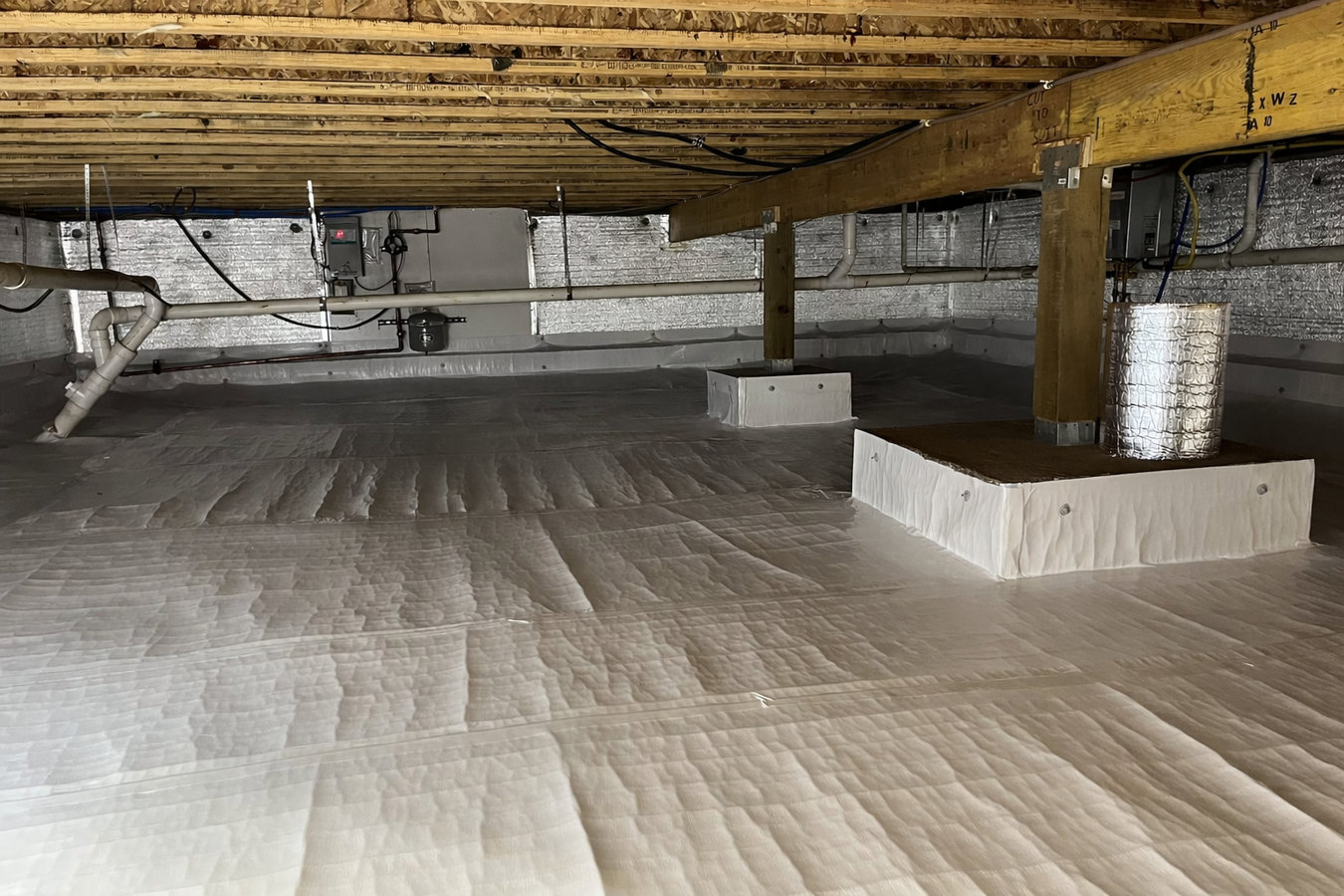
Ground moisture rising through an unprotected crawl space quietly damages your floors, joists, and air quality. We seal it off with a heavy-duty barrier so you stop worrying about what is happening under your home.
A crawl space vapor barrier in Portsmouth blocks ground moisture from rising into your home, most jobs take one day, and the material lasts 20 years or more when installed correctly. A heavy-duty plastic sheet is laid across the entire dirt floor, seams are overlapped and taped, and the edges run up the foundation walls so no moisture can sneak around the sides.
If you have been dealing with cold floors in January, a musty smell that picks up every spring, or insulation that keeps drooping in the crawl space, moisture is almost certainly the cause. Many Portsmouth homes were built before vapor barriers were standard practice, and the bare dirt floor that was fine in 1965 is now quietly working against your floor joists and your heating system. Pairing a vapor barrier with crawl space insulation gives you the most complete protection below your home.
We work on crawl spaces across Portsmouth and the surrounding Seacoast, including homes near the waterfront where high water tables make moisture pressure especially persistent. If you want to know exactly what is under your home, a free inspection takes about 30 minutes.
If your kitchen or living room floor feels noticeably cold in January even with the heat on, moisture and cold air rising from an unsealed crawl space are often the reason. Portsmouth winters are long and wet, and an unprotected dirt floor acts like a cold, damp surface directly under your feet. The problem is easy to ignore until you realize the crawl space is the source.
A persistent earthy or musty odor that peaks in spring - when the ground saturates from snowmelt - is a strong sign that moisture is moving up from your crawl space into your living areas. Portsmouth's wet shoulder seasons from March through May are when this smell tends to be worst. If you have been blaming the smell on something else and cannot find the source, start with the crawl space.
If you have ever looked into your crawl space and seen insulation that is drooping, stained dark brown, or lying on the ground, moisture has been working on it for a while. Wet insulation loses most of its ability to keep your home warm and can become a surface for mold growth. This is especially common in Portsmouth homes built in the 1960s and 1970s with fiberglass batts and no moisture protection underneath.
If you bought an older Portsmouth home and the inspection report does not mention a vapor barrier, there may not be one. Homes built before the mid-1980s in New Hampshire were rarely constructed with them as standard. A quick look with a flashlight or a free contractor inspection answers the question in minutes - and if there is no barrier, it is worth knowing sooner rather than later.
We start by inspecting the crawl space in person before any work is quoted - looking at soil conditions, existing sheeting, insulation, and any signs of moisture damage or mold. When installation day arrives, the crew clears the space, rolls out heavy-duty polyethylene sheeting across the entire floor, overlaps and tapes all seams, and secures the edges against the foundation walls. Nothing is left exposed. For homes where ground moisture is especially persistent - near the Piscataqua River or in low-lying neighborhoods - we recommend heavier material and may discuss additional drainage options.
We also offer vapor barrier installation for other areas of the home where moisture is a concern, including basement walls and floors. Many homeowners combine the crawl space barrier with crawl space insulation to address both moisture and heat loss in one visit - and pairing the two often qualifies for NHSaves energy efficiency rebates.
Best for homes with a dry crawl space that simply lacks any moisture protection - a 10 to 20 mil polyethylene sheet covering the full floor.
Best for homes in lower-lying areas or with a history of seasonal moisture - heavier material running up the foundation walls for full perimeter coverage.
Best for homeowners who want to address both moisture and heat loss in one visit - combines the vapor barrier with crawl space insulation for maximum comfort and potential rebate eligibility.
Best for homes where an old or damaged barrier needs to be pulled out and replaced - includes removing degraded sheeting and any damaged insulation before installing new material.
Portsmouth sits in a coastal climate with heavy snowfall, persistent freeze-thaw cycles, and ground that stays saturated from fall through late spring. The soil under a crawl space here holds a lot of water for months at a time, pushing moisture upward with real force. A vapor barrier is not optional maintenance in this climate - it is one of the most practical things you can do to protect your home from the inside out. Homeowners in Hampton and other coastal communities face the same conditions, and we see the same problems in crawl spaces across the Seacoast.
Portsmouth also has a large share of homes built before the 1980s - many in the South End, Islington Creek, and Maplewood neighborhoods - that were routinely constructed with bare dirt crawl spaces and no moisture protection. Proximity to the Piscataqua River and tidal water means the water table in many neighborhoods is higher than in inland New Hampshire towns, making moisture pressure a year-round concern rather than a seasonal one. Homeowners in Newburyport and other coastal communities across the region have similar challenges. If your home was built before 1985 and has never had the crawl space inspected, there is a reasonable chance it has no working vapor barrier at all.
When you reach out, we ask a few basic questions about your home and whether you have noticed any moisture signs. We reply within one business day, and most Portsmouth homeowners have a free inspection scheduled within the week - no need to have all the answers before you call.
We physically enter the crawl space to check the soil, any existing sheeting, insulation condition, and signs of moisture or mold. The visit takes about 30 to 60 minutes, and we walk you through what we found in plain terms before we leave - no pressure, just an honest picture.
You receive a written estimate laying out exactly what will be done and what it will cost - including any prep work listed separately so you can decide what to include. Take your time comparing quotes. We will not pressure you to sign on the spot.
The crew clears the crawl space, lays and seals the barrier, and secures the edges against the foundation walls. Most jobs finish in a single day. Before leaving, we show you photos of the completed work and explain what to watch for in the months ahead.
Free inspection, no obligation. We reply within one business day.
(603) 956-1359We have been working on Portsmouth and Seacoast homes since 2019, which means we know the specific moisture challenges that older wood-frame homes near the Piscataqua River and tidal water face. That local knowledge shows up in how we specify materials and how carefully we prep the space before installation.
Our standard is complete coverage - every inch of the crawl space floor, seams overlapped and taped, edges secured to the foundation walls. If we miss a gap or a seam pulls back, we return and fix it. That commitment is what separates a barrier that lasts 20 years from one that fails at the first corner.
New Hampshire's NHSaves program offers rebates for qualifying energy improvements, and crawl space work combined with insulation often qualifies. We walk you through what your project may be eligible for before you commit - so you know the real out-of-pocket cost, not just the sticker price.
If your project scope requires a building permit from Portsmouth's building department, we pull it for you and coordinate the inspection. You get a free written estimate before we start and a clear record of the work when we finish.
We combine local experience with a straightforward commitment to doing the work right. When you hire us, you know exactly what is going in, why it matters for your specific home, and what to expect from start to finish.
The U.S. Department of Energy and the EPA both note that properly sealed crawl spaces reduce heating costs and improve indoor air quality in cold climates like Portsmouth's.
Vapor barrier solutions for basement walls and floors where moisture seeps through concrete or block foundation.
Learn MoreInsulate the crawl space walls and floor joists to cut heat loss and create a truly conditioned under-floor environment.
Learn MorePortsmouth's fall rains and winter snowmelt saturate the ground for months. Schedule your free crawl space inspection now and have the barrier in place before the moisture pressure builds.