
Loading...
Serving Portsmouth, NH and surrounding areas. (603) 956-1359
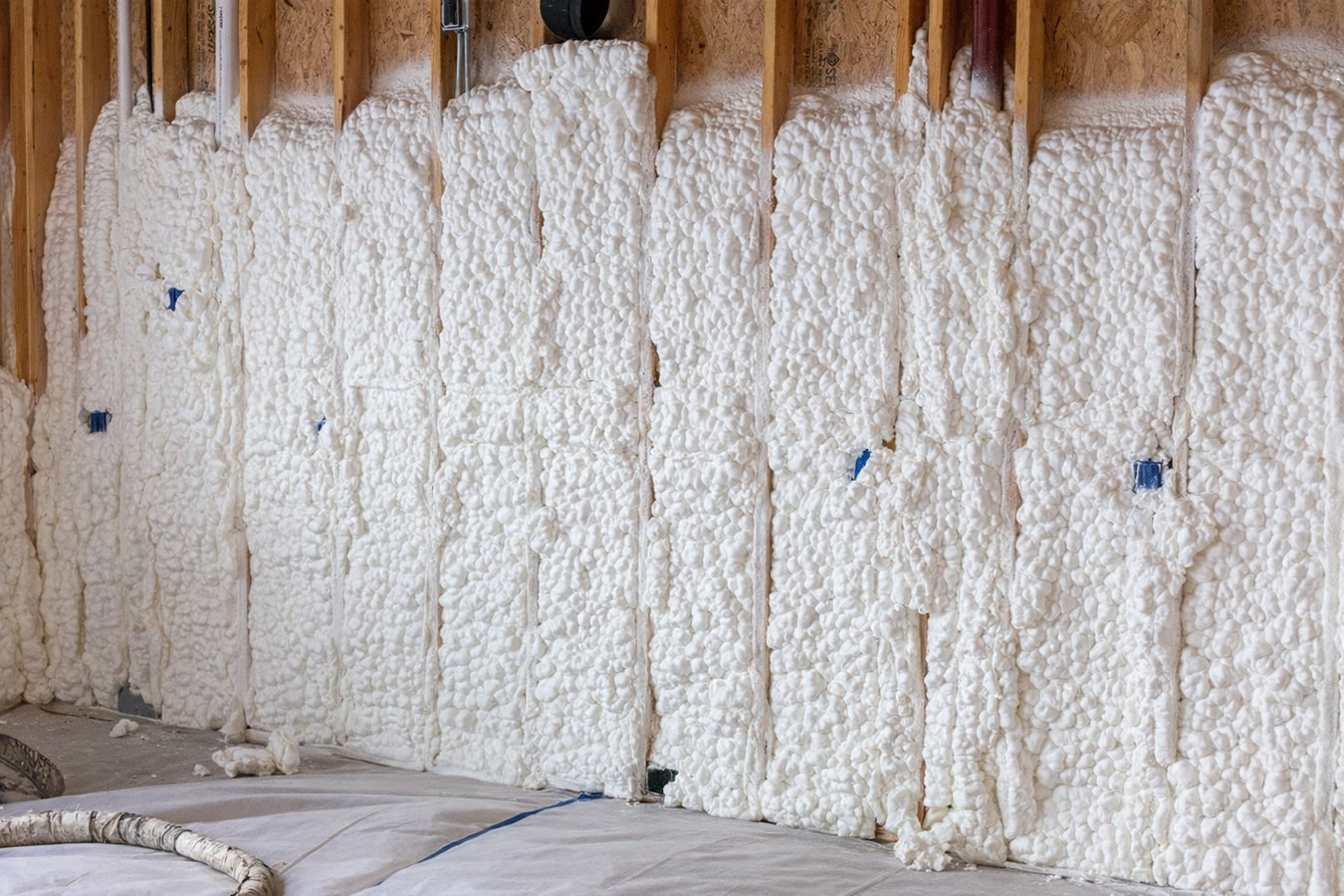
Closed-cell foam insulates and air-seals in one application - stopping drafts and moisture at the same time. It is the right choice for rim joists, crawl spaces, and the leaky spots that make older Portsmouth homes expensive to heat.
Closed-cell foam insulation in Portsmouth seals gaps and insulates surfaces in a single application, most jobs - a rim joist, crawl space, or small attic section - take one to two days from start to finish.
Standard insulation like fiberglass batts slows heat transfer through a wall - but air can still move right through the gaps around it. Closed-cell foam fills those gaps completely, so it does the job that both insulation and air sealing need to do together. In older Portsmouth homes, where rim joists, knee walls, and crawl space perimeters are often full of small, irregular openings, that matters more than almost anywhere else.
The foam also acts as a moisture barrier, which is why it is commonly specified for crawl spaces and basement walls in coastal New Hampshire. If you are starting with a basement project, our basement insulation page covers how we approach moisture assessment and the full range of options for that space.
If your oil or propane bill climbs sharply each November and stays high through March no matter what you do, air leakage is often the culprit. Portsmouth's long heating season means even small gaps in your home's envelope cost you real money every single month - and that pattern repeats year after year until the leaks are sealed.
Stand in your basement on a cold January day and hold your hand near where the floor meets the foundation wall. If you feel a draft or noticeably cold air, the rim joist - the band of wood that sits on top of your foundation - is likely uninsulated or poorly sealed. This is one of the most common and fixable heat-loss points in older Portsmouth homes.
Portsmouth's coastal humidity means crawl spaces that are not properly sealed tend to collect moisture, leading to mold and eventually wood rot. If you notice a musty smell in first-floor rooms, see water stains on crawl space framing, or find soft spots in your floor, the crawl space is likely the source - and closed-cell foam combined with proper sealing is a standard fix.
If one part of your home never reaches the same temperature as the rest, the insulation in that area is almost certainly inadequate. Attic floors, knee walls in cape-style homes, and the ceiling above an attached garage are common weak points in Portsmouth's older housing stock - and closed-cell foam fills the irregular gaps that batt insulation cannot reach.
We apply closed-cell foam in the locations where it does the most work in a typical Portsmouth home: rim joists, crawl space walls and floors, basement perimeters, and attic knee walls. Each of these areas tends to be full of irregular gaps and framing members that batt insulation cannot seal - and in Portsmouth's climate, those gaps drive heat loss and moisture problems year-round. If your project involves a crawl space that needs a full encapsulation approach, we pair foam with a vapor barrier for complete coverage.
Closed-cell foam is also a good fit for homes where structural rigidity is a secondary benefit - once cured, the foam stiffens the framing it is applied to, which can be a quiet bonus in older homes where floors flex. For interior living spaces like finished walls, we compare closed-cell foam against open-cell foam insulation and other options depending on the vapor management goals. Our full range of spray foam insulation services covers both products side by side.
The most cost-effective starting point for most Portsmouth homes - sealing this band of framing at the top of your foundation wall cuts drafts and heat loss at the source.
Best for homes with vented or semi-conditioned crawl spaces where moisture and cold air entry need to be stopped at the perimeter.
Ideal for heated or finished basements - closed-cell foam insulates and vapor-blocks in one application, avoiding the moisture trapping risks of other materials.
Suited to cape-style homes and attic knee walls where irregular framing makes traditional batts ineffective and air leakage is high.
Portsmouth has a significant share of homes built before 1950 - wood-frame colonials and capes that were built before modern air-sealing standards existed. These homes typically have gaps around rim joists, in attic knee walls, and at the foundation sill that let cold air in and heat out all winter. Closed-cell foam is particularly well suited to these structures because it fills irregular cavities that batt insulation cannot reach, and because it blocks moisture vapor - a real concern given Portsmouth's proximity to the Piscataqua River and the Atlantic coast.
The payback here is faster than in milder climates because Portsmouth's heating season runs roughly six months and heating fuel costs are among the highest in the country. We serve older homes across the area, including Kittery, ME and Newburyport, MA - coastal communities with the same combination of old housing stock and salt air humidity that makes closed-cell foam the right call. The EPA's guidance on spray foam installation and safety is available at epa.gov for homeowners who want to understand how the process works.
Tell us the age of your home, what areas you want insulated, and any specific problems you have noticed - drafts, moisture, or uneven temperatures. We reply within one business day and come prepared.
We walk the areas in question, check for moisture or structural issues that need addressing first, and give you a written estimate that spells out exactly what areas will be covered and how thick the foam will be applied.
Portsmouth requires permits for insulation work that changes your home's thermal envelope. We pull the permit, coordinate the city inspection, and confirm your start date - you do not have to manage any of it.
Most jobs - a rim joist, crawl space, or attic - are completed in a single day. We give you a specific re-entry time based on job size and ventilation, then walk you through the finished areas before we leave.
Free estimate, no obligation. We handle permits, give you a clear re-entry time, and walk you through every step.
(603) 956-1359Portsmouth requires a permit when insulation work changes your home's thermal envelope. We handle the permit process from start to finish and coordinate the city inspection. You get documentation that the work was done to code - which matters when you sell your home.
Spray foam chemicals need time to cure after application. We give every homeowner a specific re-entry window based on job size and ventilation conditions - not a vague estimate. This is a basic safety step that should never be skipped.
Portsmouth's combination of salt air, coastal humidity, and pre-1950 wood-frame construction creates conditions that require more care than a standard installation. We assess for moisture before any foam goes in and address issues that would cause problems down the road.
New Hampshire's NHSaves program and the federal energy efficiency tax credit can meaningfully reduce your project cost. We explain what your job qualifies for upfront - details at nhsaves.com. Verify spray foam installation standards with the EPA's guidance at epa.gov.
Portsmouth's older homes and coastal conditions require more than a standard installation approach - they require a contractor who has thought through the moisture picture, the permit process, and the safety steps before showing up with equipment. That is how we approach every closed-cell foam job we take on.
A lighter, more flexible foam option suited to interior walls and attics where moisture vapor permeability is acceptable.
Learn MoreAn overview of both closed- and open-cell spray foam options and how we match the right product to each application in Portsmouth homes.
Learn MorePortsmouth heating season is long - locking in your project now means your home is sealed and ready before the first hard freeze.